Articulate Mechanical Digit
A three-segment mechanical finger designed from scratch in SolidWorks with servo-driven, programmable motion.
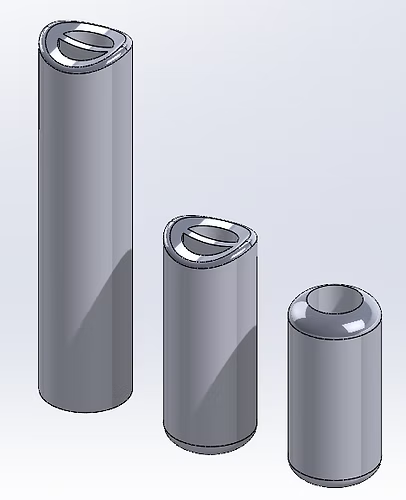
[Initial Anthropomorphic Finger Design]
Motivation
I started this project as a freshman driven by an interest in bionic prosthetics. This was my first project in dexterous robotics, I wanted to understand how a mechanical finger actually worked before pursuing more advanced robotic hand research. The goal was to design a programmable, articulating device with three segments that mimics the motion of a human finger, built entirely from scratch using mechanical tendons inspired by the human hand. My design for this early project was highly anthropomorphic, highlighting some of the challenges of designing based off of biology.
Design & Iteration
I followed an engineering design cycle, setting specifications to work towards, researching human joint mechanics and prosthetic technology, prototyping, and iterating. The project went through multiple major design revisions:
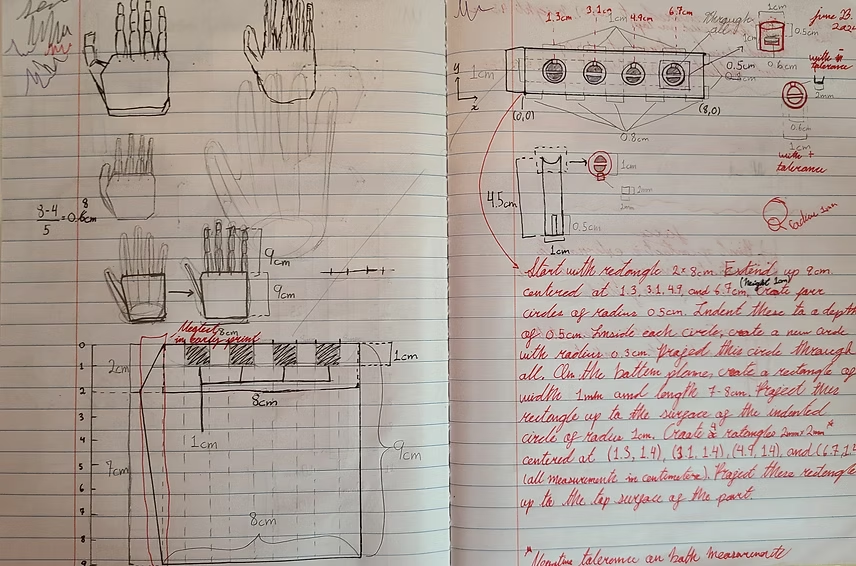
[Initial prototype dimensioning]
- J1 series: Initial prototypes closely mimicked human finger bone geometry. Worked as a proof of concept but had durability and friction issues at the hinge joints.
- J3 series: Departed from the human bone shape and replaced hinges with ball bearings friction-fit between split segments. Significantly more durable and smoother, though tight tolerances still caused resin rubbing in places.
- Discovered that small tendon channels trapped uncured resin during printing: learned to widen channels and split parts to allow drainage.
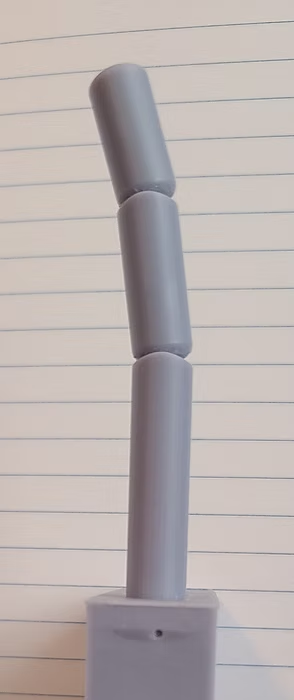
[Initial Prototype Assembled on Base]
All parts were modeled in SolidWorks and printed on an Elegoo Saturn 3 Ultra resin printer using plant-based resins. The mechanical "tendons" are controlled by ECO POWER 12g micro servos driven by an Arduino UNO WiFi Rev.2 with a Motor Shield Rev.3.
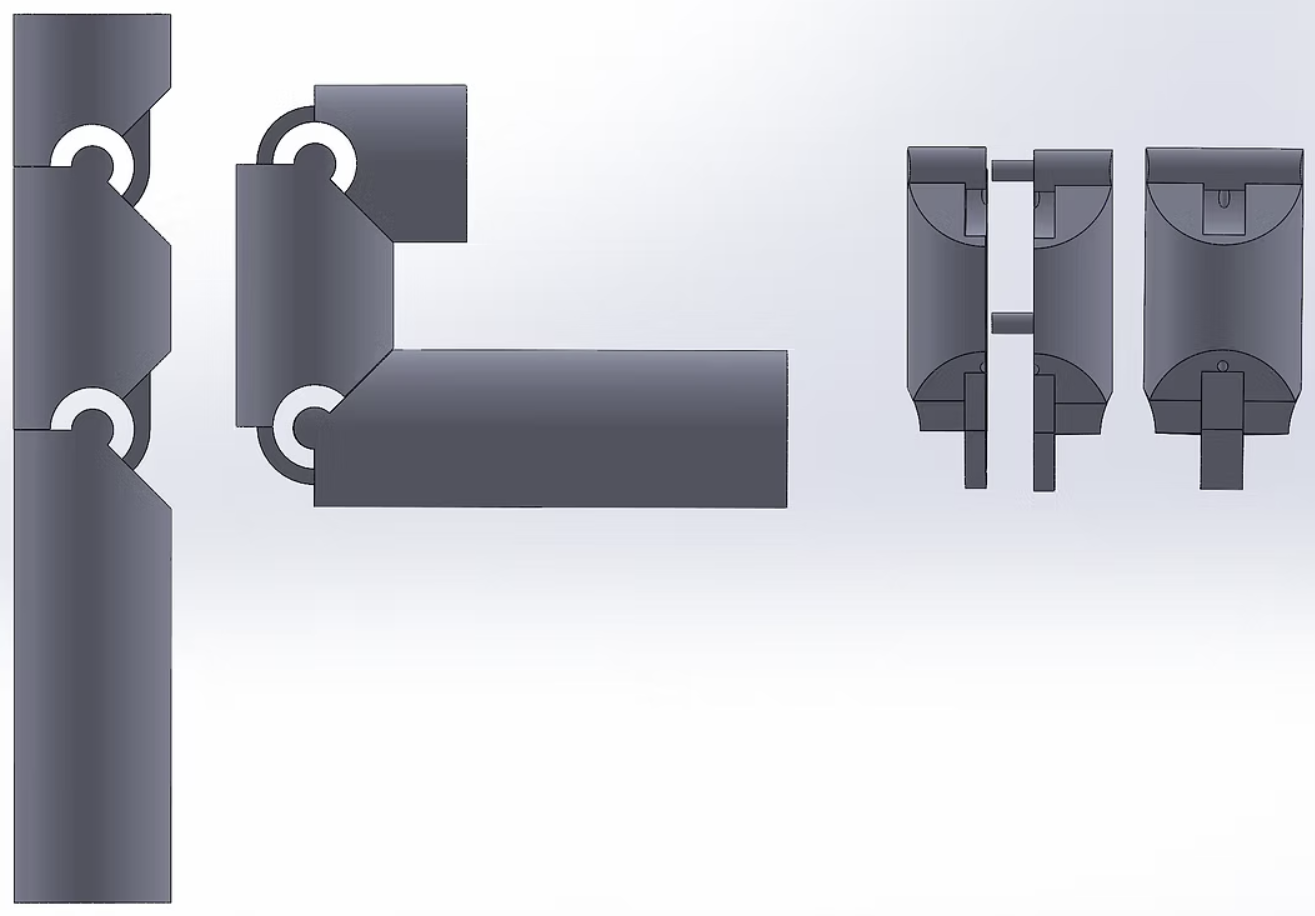
[J3 Series in Solidworks]
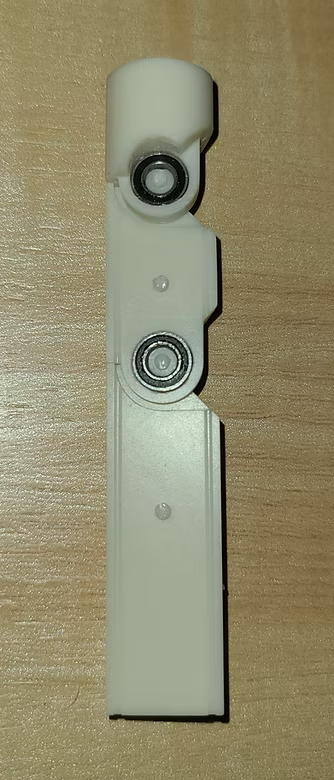
[J3 Series Printed]
Specifications included: three segments matching human bone proportions, finger-like range of motion, mechanical tendons for position control, holding 5 lb in a bent position, and surviving 1,000+ open/close cycles. Later CAD iterations building on this work are documented in the Multi-DOF Finger & Hand Designs page.
Outcome
The J3 design achieved smooth, programmable curl and extension with significantly improved durability over earlier iterations. The ball bearing joints and split-segment approach proved far more reliable than the original hinge design.
More importantly, this project built the mechanical design intuition I later applied to tendon-driven robotic fingers in a research context. Understanding clearances, joint friction, print tolerances, and the gap between a clean CAD model and a working physical mechanism. It was also my introduction to the iterative, failure-driven design process that now underpins all my work, and one of my first project using Solidworks and CAD design.